A Vision is Critical for Downtown ABQ to Flourish

Time to Update & Upgrade that Sector Plan

by Tim Trujillo

About the author: Tim Trujillo is one of the co-founders of Urban ABQ. He is an urban designer and planner currently based in San Francisco, CA
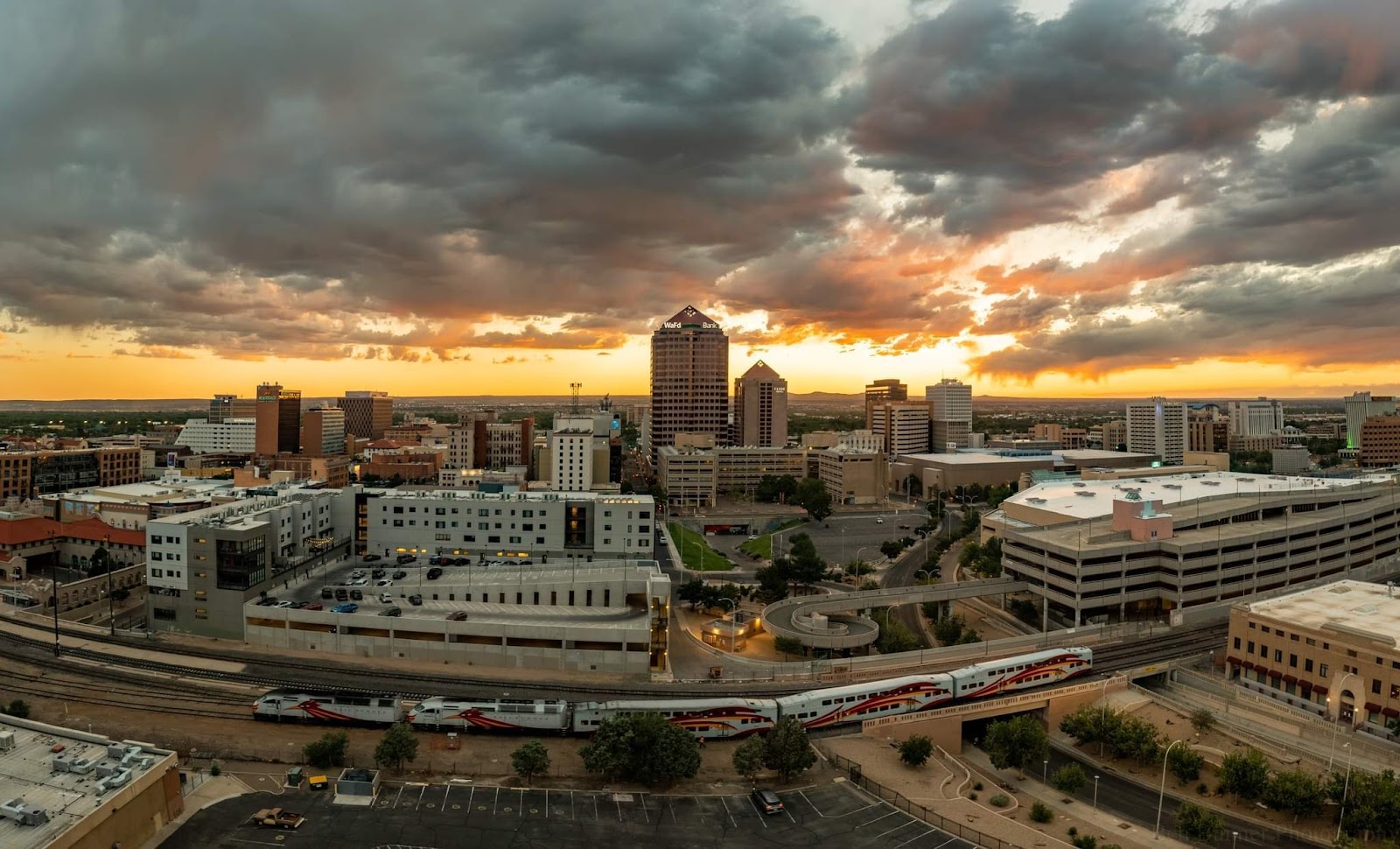
A view of Downtown Albuquerque looking west, feat. the Rail Runner, One Central, the Convention Center, and other assets/destinations. Image source: Ben Bunner

In the late 1990s, there was considerable discussion and press around the return to cities as many were envisioning what their downtowns might one day look like after decades of white flight and the ravages of Urban Renewal. Some cities were already experiencing a return of professional workers and creatives looking to find lower rent in walkable neighborhoods, typically in larger cities with an existing stock of dense housing or converted warehouses near their cores. After numerous attempts to redevelop Albuquerque’s city center, this seemed like the right time to jump on the bandwagon as stars were aligning for the re-urbanization of cities.
Cover of the Downtown Sector Plan

History & Background

In 1998, then-mayor Jim Baca oversaw the creation and subsequent adoption of the Downtown 2010 Sector Plan, which called for a form-based code and catalytic projects intended to galvanize downtown Albuquerque. Though revitalization got off to a quick start, political and economic headwinds ultimately slowed it to a frustratingly slow crawl by the end of the aughts. As Albuquerque continues to weather economic boom and bust cycles, a succession of political leaders listlessly wonder how or what to do about one of the most important neighborhoods in the state. A vital answer is in the one key piece of the plan that was never formulated: a vision, or spatial blueprint, articulating where and how all of the pieces should come together to create a legible and vital urban core. 

The 2010 Sector Plan referred to downtown and surrounding areas as “the District”, a snazzy new marketing term at the time. The plan had the lofty objective of making downtown “the best mid-sized downtown in the U.S.” This was to be achieved by delivering a laundry list of catalytic projects that included 5,000 new downtown residents (which downtown is well short of in 2023), an arena and/or stadium (nope), a grocery store (check), performing arts center (nope), and street tree irrigation (really? Not even this is completed?), among a few others.

The heart of the plan was an emerging form of development regulation called form-based zoning code that controls the form (heights, widths, setbacks, entryways, among others) of buildings and enables a plethora of urban-related uses. The authors of the plan were the Pasadena, CA-based architecture firm Moule & Polyzoides, whose founder was a former president of the Congress for the New Urbanism (CNU) and had lectured at UNM. While this plan had some early success, headwinds quickly developed, which, over time led to its ineffectiveness.

It is worth noting that Sector Plans, especially in critical areas such as downtown, should be updated at least every 10 years as social and economic conditions change.

It has been 25 years.  
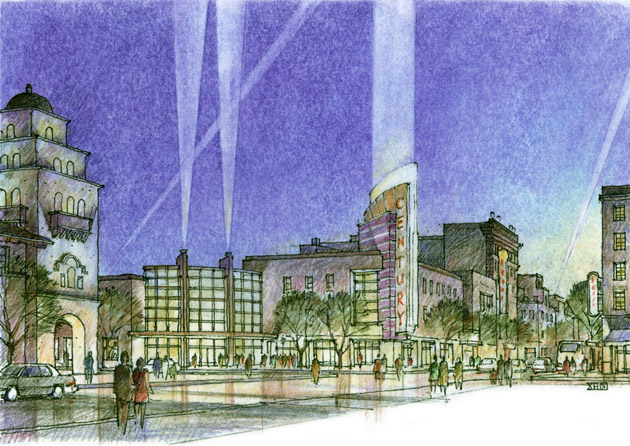
An illustrative graphic of Downtown ABQ, feat. the Theater Block.

Unfortunately for downtown, Mayor Jim Baca only served a single term and was replaced by Marty Chavez who had already served the prior two terms. Mayor Baca had not only delivered the 2010 Plan but oversaw the construction of the Alvarado Transportation Center and Theater Block, which together represented downtown’s nascent ascendance.

During Mayor Marty’s administration, it was becoming clear that cities with revitalizing downtowns were growing more competitive when it came to attracting new jobs and a young, educated workforce that was driving the new knowledge economy. However, downtown was low on his list of priorities and, thus, the mayor never carried forward any of the prior administration’s or the 2010 Plan initiatives, nor did he have anything planned aside from a tepid attempt to build an arena, which was quickly shot down by a surly land owner. Seemingly grown out of the void in leadership was the Downtown Mainstreet Organization, which worked toward the incremental enhancement of the city’s core. The Executive Director, staff members, and their pro bono board worked to study, plan, and execute small projects for which funding could be found, largely through humble grants and civic goodwill. 
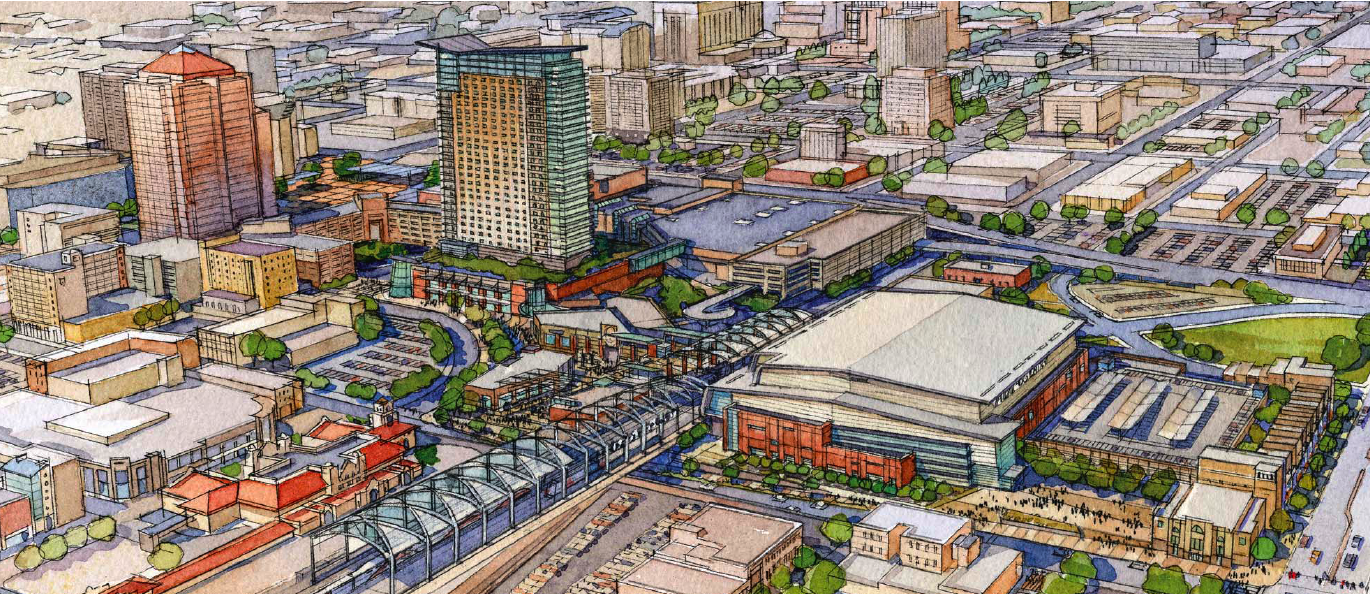
An illustrative vision of Downtown Albuquerque. Note an indoor stadium on the Innovate ABQ site, as well as high-rise development adjacent to the Convention Center.

When Chavez’s tenure came to a close and Republican Richard Berry was elected mayor in 2009, The Great Recession halted any remaining vestiges of momentum and downtown revitalization went idle for several years, aside from the efforts of Downtown Mainstreet. In a surprising turn of events, Mayor Berry determined that revitalizing downtown would aid in retaining talent and attracting young professionals and investment to the city. To his credit, he contributed a fair amount to revitalization, including:

  • Rehabilitation of the Convention Center;
  • The Innovate ABQ Master Plan;
  • The Railyards Master Plan and some early site work that instigated the weekly market;
  • The Albuquerque Rapid Transit (ART) bus system, designed to whisk riders in and out of the city center and connect to UNM & Uptown.

By this point downtown had some momentum again with a combination of the efforts by the mayor along with Mainstreet’s contributions like the neon lighting along Central Avenue, taking on the Downtown Grower’s Market, the planting of new street trees, and the activation of Civic Plaza. However, the mayor did not like that Mainstreet’s efforts were not organized through his office so he pulled the plug on city funding for the organization, which significantly reduced their impact moving forward. 

At the end of Mayor Berry’s second term in 2017, voters opted for Democrat Tim Keller, who promised to restore Albuquerque…to some hyperbolic end as all new mayors do. When he entered the mayor’s office he disregarded his predecessor’s work by letting the Innovation ABQ Master Plan languish, also decided not to fund ABQ Mainstreet, and for nearly six years had been mostly aimless in his attention to downtown. He also threatened to pull the plug on the ART system (which was 99% built and had mostly been paid for with Federal funds), and then at the eleventh hour came through to act as its savior. He re-released RFPs (something Berry did at the end of his term but ran out of time to see through) for projects at two sites, Civic Plaza North and another behind the Theater block, yet nothing has come from those despite intriguing entries.

To his credit, he did add a police presence by giving APD space within the city-owned building at 4th and Central, which, judging from news reports, does not seem to be solving any issues. It certainly hasn’t increased business nor visitation. He also recently presented a concept for the Rail Trail, which does have the potential to spark renewed interest in downtown. However, all we’ve seen are pretty renderings so far. As someone who has designed and built a similar facility in another city, there are a million complications that come with high costs when dealing with a project like the Rail Trail that will take serious effort by the city and administration to see through to fruition. Also, I’m doubtful $80 million will be enough given those elevated segments, art pieces, and the 7-mile length. I’ll bet that amount of money for a downtown soccer stadium would have a better return on investment for downtown but I digress. Time will tell. 
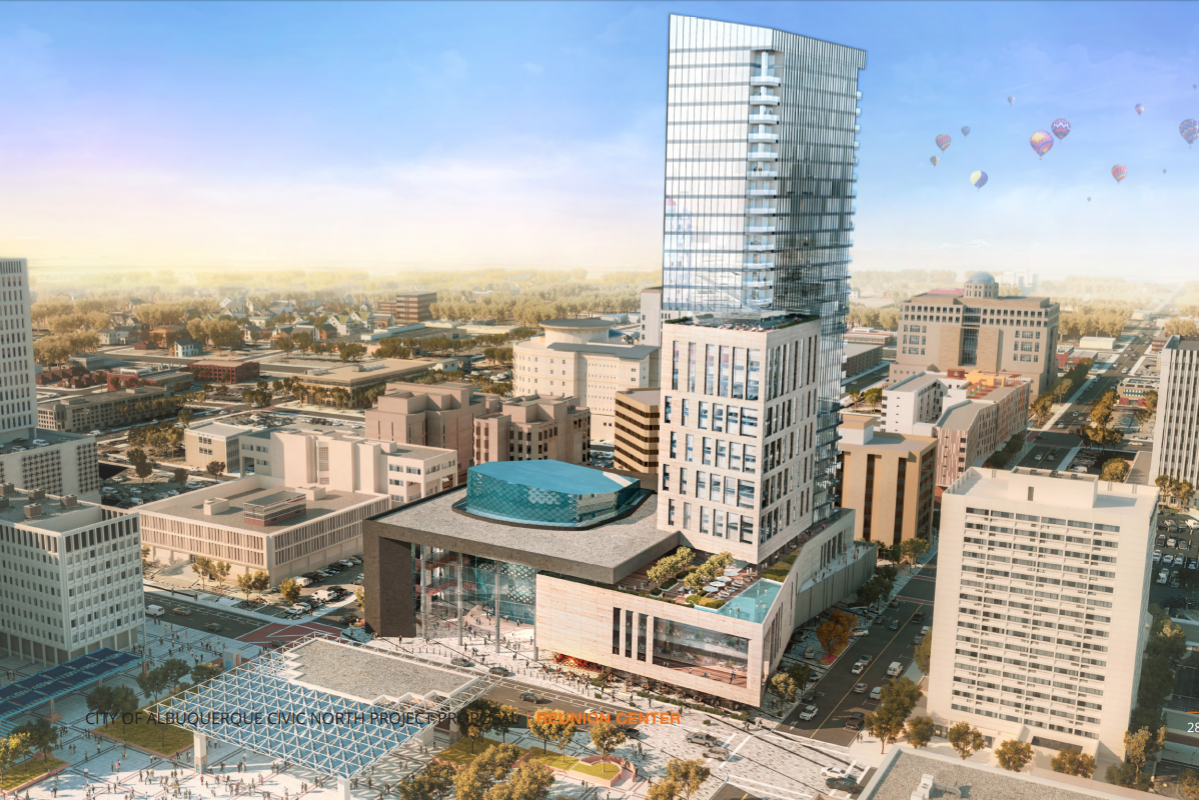
The RFP Submittal for Civic Plaza North included a performing arts theater and a condo/hotel tower

Next Steps

Returning back to the late 90s when Jim Baca hired the new urbanists to shape Albuquerque’s downtown, designers were still learning how urban building form worked with market forces. Professionals were still learning how to design cities based on models that were created for millennia before the arrival of the automobile led cities in a new, sprawling direction. The new urbanist theory proposed that within these denser, more urban areas, commercial and retail should front all of the streets the way they did in older cities. Unfortunately, this is not how market dynamics play out in the real world and economic forces shift over time.

In the couple of decades that have passed, we learned that low-to-medium density urban areas such as our downtown cannot support retail and commercial uses along every street and corner. The arrival of online retail has only further exacerbated the issue by siphoning off cash from local businesses. Retail and commercial require disposable income to be viable and until downtown further increases residential density and attracts thousands more jobs, the Groundhog Day-like cycle of retail and commercial turnover in existing spaces that we have witnessed for decades won’t end.
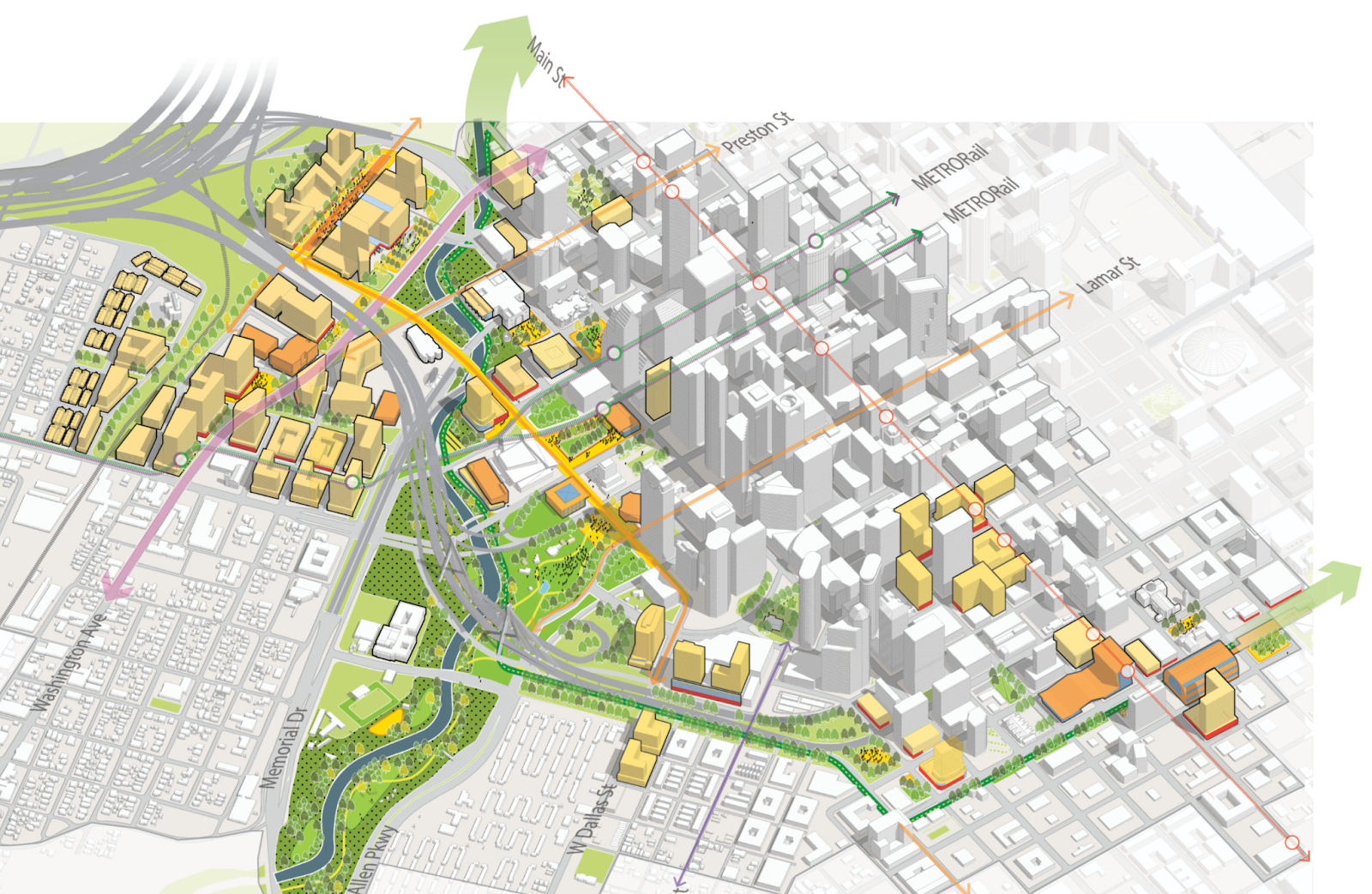
Downtown Houston Vision. Source: Asakura Robinson

What the city critically needs is a new, illustrative, contemporary vision for how downtown should grow over time so that current and future leaders will have an updated roadmap for which residents can hold city officials to account. Some people will point out that we have a “Downtown Forward Plan” put forth by the Metropolitan Redevelopment Agency (MRA), but it’s mostly a list of initiatives (the Railyards, Rail Trail, and Media Academy) set forth by this mayor (not the community), as those were never priorities from previous planning efforts. A new vision should be in the form of an updated, new Downtown Sector Development Plan.

Barcelona had the Cerda plan, Paris had Haussmann, Chicago had Burnham, and DC had L’Enfant. Today, no one person generates these plans as they are typically awarded to national and international firms that specialize in such plans, and more importantly, their processes. While the 2010 Plan, ahem, now the 2025 Plan (and largely unchanged since it was written 25 years ago!) has a punch list of desired projects to choose from, it does not offer a firm vision as to where any of those projects should be placed, nor how they should be connected. It is overly focused on architecture and lacks direction for the equally important ingredient: the public realm. What is missing are commitments to delivering key elements of a plan such as open space, mobility, housing, ecology, and urban design that will guide all of the city’s placemakers (e.g. mayor, private developers, the university, labs, and municipality) to methodically and strategically chip away at completing the community’s vision over time.

For example, downtown needs a carefully crafted strategy that will guide retail and commercial ground floor uses to foster an inviting experience for residents and visitors. Scattering these uses around downtown will be less effective than concentrating them together along, say, Gold Ave and 4th Street. Although the 2010 Plan (sorry, the 2025 Plan) calls for a first-class pedestrian experience, it does not define what that means. And while Jeff Speck’s strategy document has some good ideas, they were more tactical in nature, suggesting a temporary condition intended to make incremental enhancements.
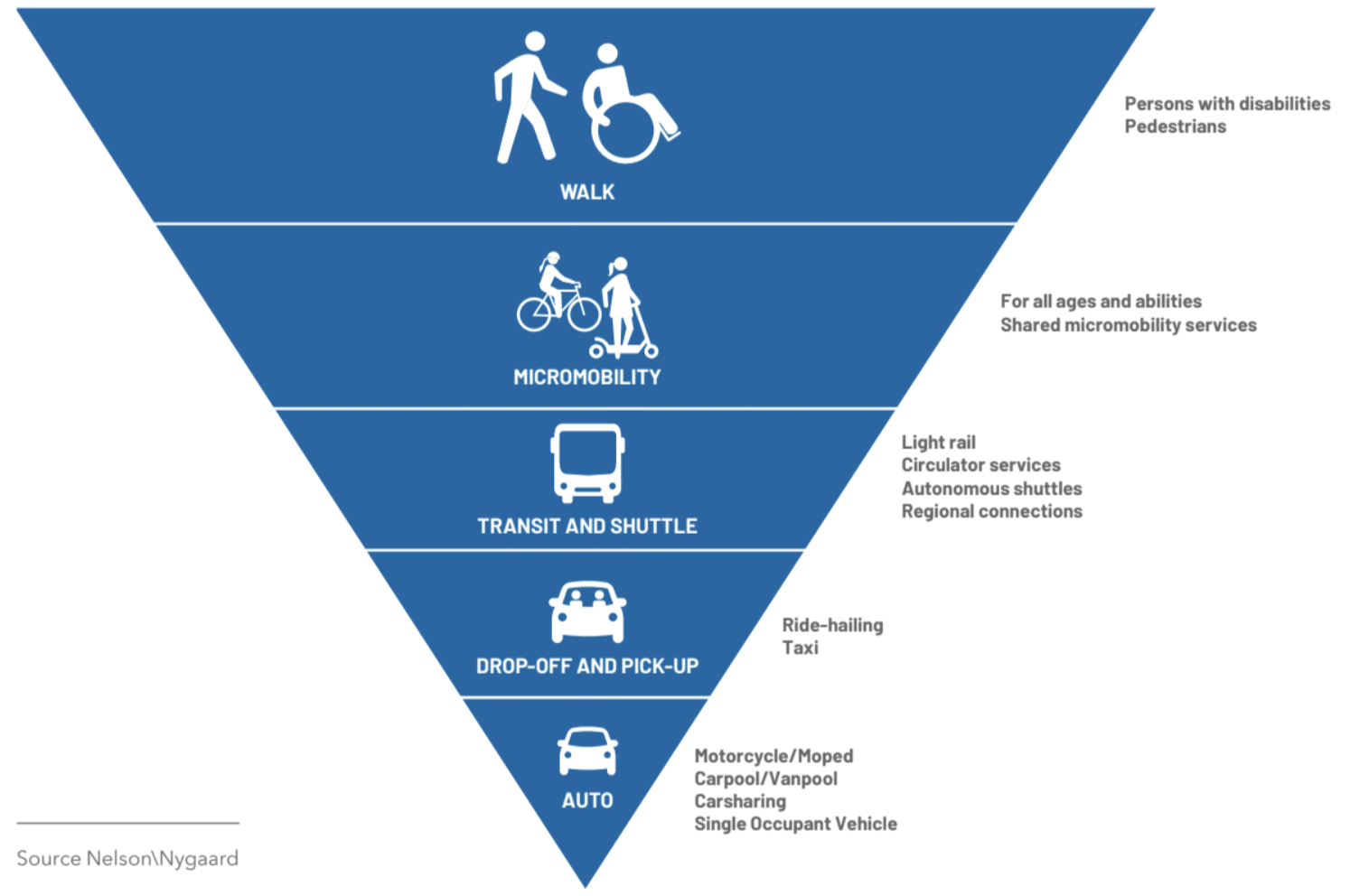
A diagram that illustrates the desired mobility hierarchy in cities

A downtown vision should illustrate a holistic street network strategy for active mobility, transit, delivery, and freight that lays out clear street section guidelines indicating dimensions for landscape buffered sidewalks, street trees, and buffered bike lanes. The City did update its standards for sidewalk design to help facilitate the type of comfortable and attractive streetscape that is appealing and comfortable for pedestrians and contributes to urban vitality. But now the city needs to know exactly how and where to apply those new standards. Additionally, a new plan should contain ecological objectives, which would include a framework for the delivery of stormwater management and tree canopy, as well as updated and new types of open spaces, such as parks, pocket parks, parklets (parquitos!), and publicly-accessible private open spaces, meant to serve a growing and thriving downtown populace. I, for one, am ready to reimagine Civic Plaza and would also love to see new parks in the area south of Central. A lot has changed about the way we interpret urban living and the Sector Plan should reflect a contemporary vision – not one from a quarter century ago. 

2035, Downtown Albuquerque

Picture it: people are pouring into downtown via ART, the RailRunner, the Rail Trail, and a new streetcar (a guy can dream, right?) and making their way to dinner in anticipation of opening night for a highly anticipated movie (Barbie III, perhaps?), which is occurring the same night as a flamenco performance at the Kimo, a New Mexico United soccer match at a new downtown stadium, and a philharmonic concert at the new performing arts hall across from Civic Plaza. The vibrancy that is derived from people of all walks of life rubbing shoulders at local venues, restaurants, bars, on the sidewalks, and in the streets is what makes downtown Albuquerque unique to the entire state of New Mexico. It belongs to everyone in the city and it deserves priority. Vibrancy derived from activation of the public realm is the magic of cities that we experience when we travel and we occasionally get hints of it at events such as Summerfest or First Fridays. 

Conclusion

As of today, downtown Albuquerque has fallen behind its peer cities of Omaha, Tucson, and Oklahoma City, along with lower-tier cities like Asheville, NC, Greenville, SC, and possibly even El Paso and Colorado Springs. Waiting any longer to move forward is senseless when we know what the first step should be. We need to update the Downtown Sector Plan and envision an aspirational downtown Albuquerque so that we can collectively roll up our sleeves to build it into a more vibrant, unique, and exciting place, not just during special events but on a daily basis. No single project is going to be the panacea to the cause; it will take many investments, both large and small and both private and public. An updated Sector Plan with a proper public process can save us from the whiplash of mayoral and council priorities, (in)abilities, and whims, along with indecisiveness about where to place catalytic projects like concert halls, arenas, and stadiums. While we have many well-intentioned agencies and leaders, what V.B. Price wrote in Albuquerque: A City at the End of the World in 1991 still holds true: “Albuquerque, with all its artists, writers, and PhD’s, is strong on gifts of genius, but leadership is not among them.” There is some hope in recently enacted Legislation (Senate Bill 251) that will help send additional funding to our Metropolitan Redevelopment Agency (MRA), who will reinvest the funds in downtown infrastructure. An updated vision will help the MRA prioritize how and where to spend those funds as they become available so that over time, the city can lay the groundwork for further investment that will contribute to the progress of our little, beloved downtown according to our collective vision. Someday we’ll get there but it’s about time we put the effort in the next gear.  Perhaps then Downtown ABQ could make the claim that it is the best midsize downtown in the U.S.
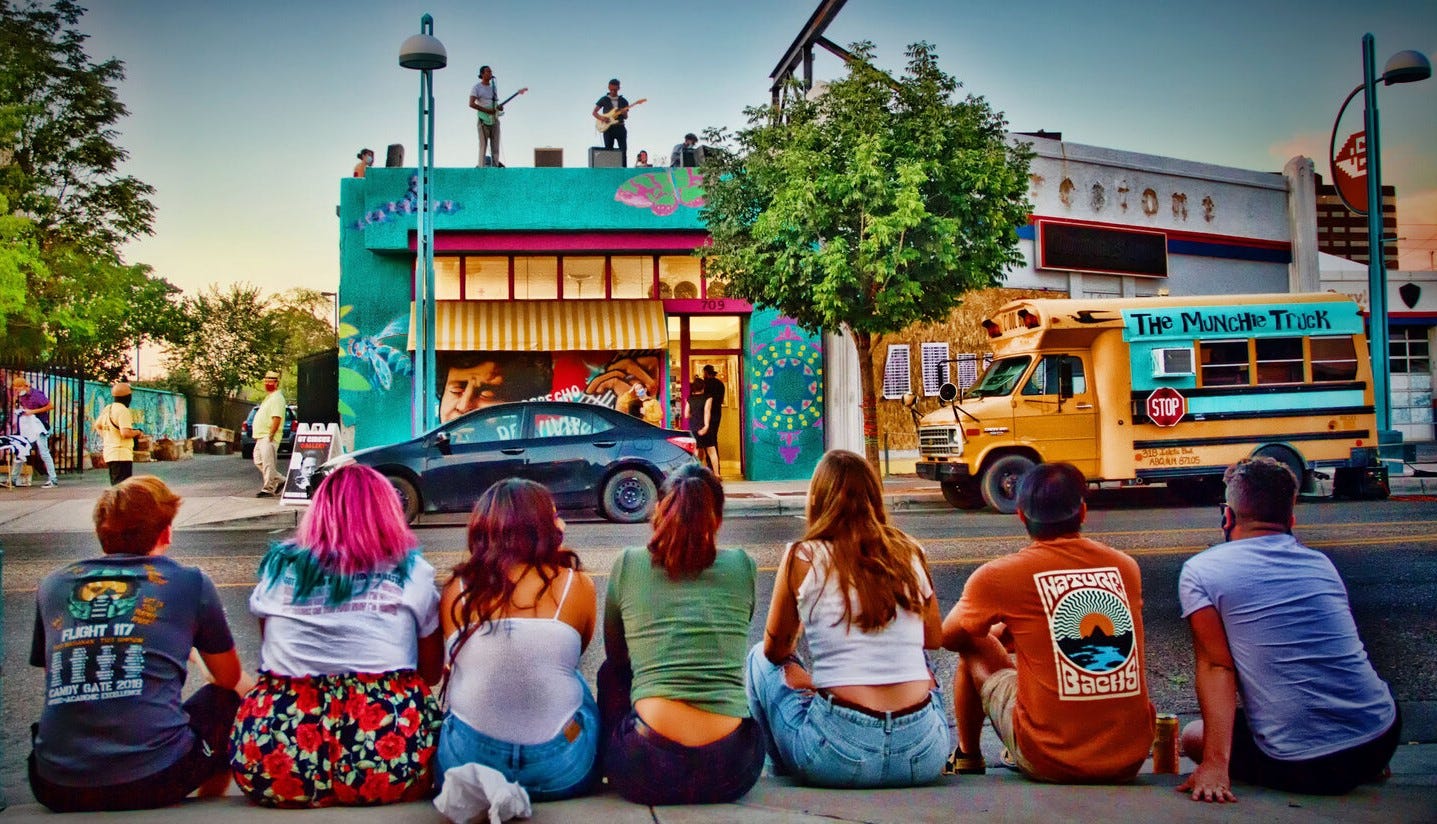
Source: Photo by Frank D, courtesy of ABQ Artwalk

The Importance Of A Downtown Soccer Stadium

by Tim Trujillo

About the author: Tim Trujillo is one of the co-founders of Urban ABQ. He is an urban designer and planner currently based in San Francisco, CA

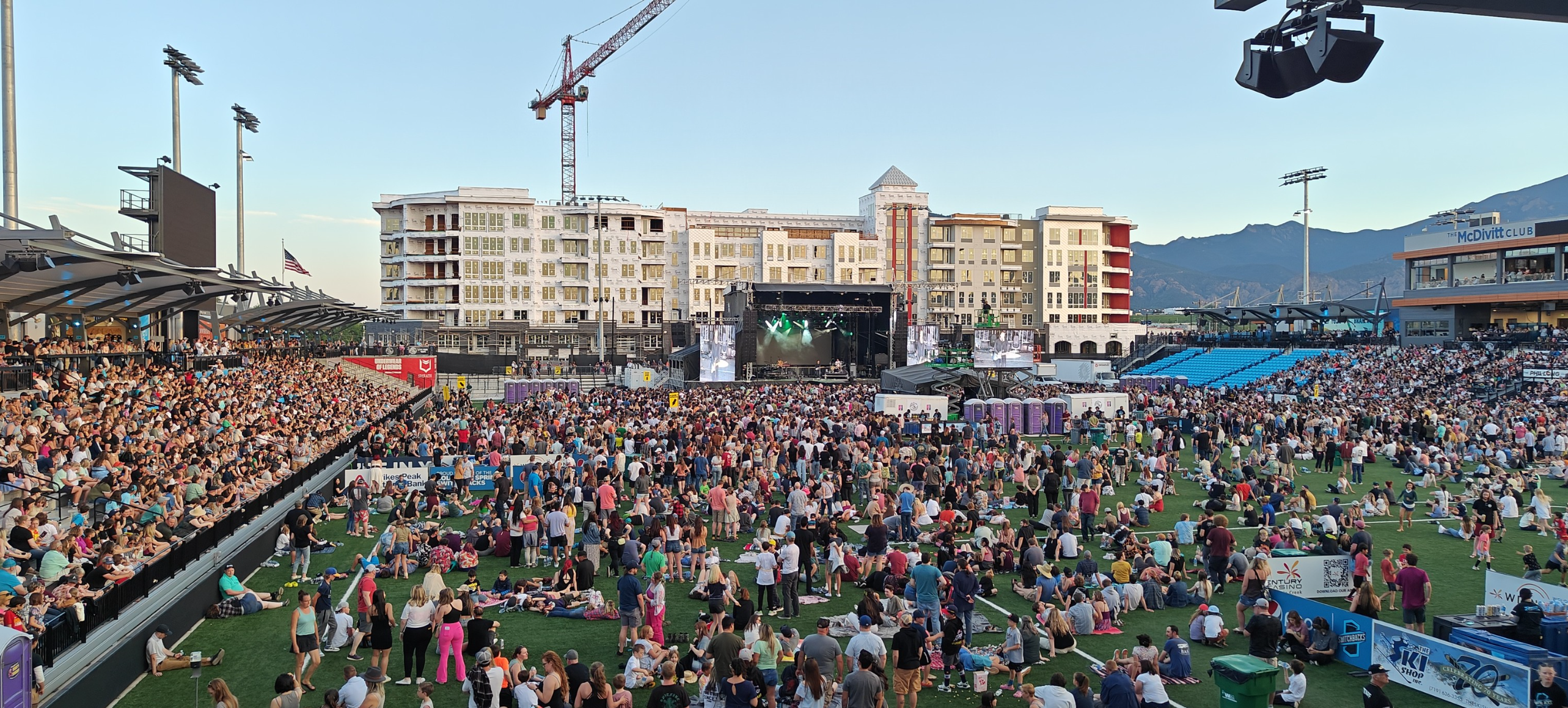
The recently completed Weidner Field multi-use stadium in Downtown Colorado Springs, Colorado, is shown here during a concert with development in the background.

A recent headline announced that City of Albuquerque Mayor Tim Keller is doubling down on his decision to build a soccer stadium at Balloon Fiesta Park. When leaders make decisions like these it’s the community that ultimately has to live with them for decades and generations. We all want the NM United soccer team to stay and thrive, but the city has a chance to do better than placing a sports venue in the outskirts where there is little potential for residual economic value creation. Balloon Fiesta Park lacks transit options for the thousands of attendees, thus forcing most attendees to drive (usually after a few drinks) to and from a sea of parking to attend events. Meanwhile, global warming is wreaking havoc on society. This is not the return on investment (ROI) or value creation we want and need from spending large sums of public capital. 

We’ve seen this before in cities like Arlington, TX, Philadelphia, and San Antonio. These cities spent large sums of public money to construct arenas and stadiums in suburban locations surrounded by parking lots. The result has been traffic congestion, acres of rarely used asphalt parking lots contributing to the urban heat island issue, and little residual value creation or vitality aside from what occurs in the venue during events. Without mass transit options, these places don’t exhibit equity. It is the complete and total opposite of sustainability, which most cities (and leaders) claim to value

Most cities in the developed world have witnessed the results of poor planning and have gone in a different direction – cities like Denver, El Paso, Louisville, Des Moines, Omaha, Houston, Seattle, Sacramento, Portland, Raleigh, Denver, Charlotte, Atlanta, Boston, Baltimore, Jacksonville, Nashville, Vancouver, Montreal, Toronto, Edmonton, Winnipeg…you get the idea. They constructed sports venues in or near their city cores in order to utilize existing infrastructure and reap the residual benefits. Increased spending at local retail, restaurants, and bars, hotel bookings for visitors, and increased land values drive investment and ultimately send additional tax money back to the city to pay for municipal services. San Antonio has begun discussions to build a new downtown arena for the Spurs and make good on their previous mistake because they want the resultant vitality that comes from thousands of visitors spending money at local businesses and driving value in their downtown. 

Back in the early aughts, Albuquerque made the decision to redevelop the old Albuquerque Sports Stadium, where the former Dukes baseball team had played for decades. There was debate about whether to renovate the old stadium or build a new one downtown. In the end, the powers that be agreed that renovating the stadium would be cheaper and faster. Unfortunately, that premise was proved false because the price tag crept up after the decision was made and ultimately cost nearly the same as the proposed new downtown stadium. This was at the same time that revitalization had kicked off in earnest downtown, leaving many feeling as if they’d been bamboozled, knowing that a downtown stadium would have created additional momentum in the revitalization process – a better ROI. There’s an apt saying: you get what you pay for. 

Later in the same decade, the state decided to renovate The Pit instead of building a new arena downtown. The state promised that the renovations would restore the facility to its former glory and include all of the modern comforts of new arenas. For $60 million, the result is a facility that is still only good for a limited number of sports, has terrible sound for concerts, and never met the standards set forth by the NCAA to host the annual men’s basketball tournament. Again, you get what you pay for. 

Future Opportunities

Now the city has a chance to learn the lessons of its own past, as well as the lessons of other cities’ successes and failures, and invest in centrally located public venues that leverage existing infrastructure, spur investment, and meet community goals for downtown redevelopment, and do so in the most sustainable manner. Our downtown has existing transit connectivity and large amounts of unused parking. Downtown business owners would love to receive a shot in the arm in the form of increased sales. Hotels would receive relief from pandemic-related impacts through room bookings for visitors to the city looking to attend events. Land values would increase and more tax dollars would get recirculated back into the state and municipal coffers for critical services. This sort of value creation does not occur at the fringes of town with few amenities nearby. For downtown to thrive, our government needs to make these large investments to drive people, value, and spur private investment. Scattering dollars here and there just doesn’t have the same impact. I’d bet that a downtown soccer stadium would have a significantly greater impact on downtown revitalization than a ~$80 million Rail Trail for roughly the same amount. But imagine if they were placed in proximity to one another to leverage those combined investments. 

The urbanist fantasy depicted in the above diagram (click to expand) was developed as a very rough study to better understand the capacity of downtown to house large public venues like an arena, a soccer stadium, and a performing arts theater, catalytic projects that would boost revitalization. What emerged is a blaring series of opportunities between 1st Street and Broadway Boulevard on both sides of the railroad tracks that allow for flexibility and considerable new development of all types in a manner that meets the community goals for redevelopment. Imagine the impact this level of investment would have not only on downtown but the region’s psyche of who we are and what we can achieve. The above illustration is just a concept meant to start a conversation. The following is an explanation for each element of the diagram.

Soccer Stadium

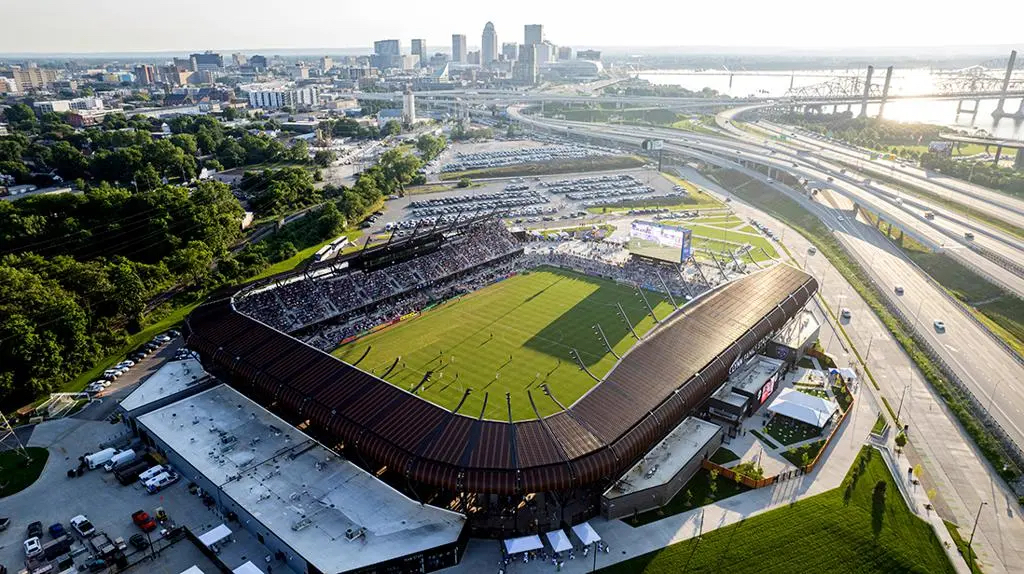
The parcels bounded by Lomas, Broadway, Mountain, and the railroad tracks comprise just over 18 acres in total. USPS had been looking to relocate to a more modern facility with better freeway access a decade ago and this site is a glaring opportunity. The area is large enough to place a soccer-specific stadium and still has enough space for new residences and open spaces such as stadium plazas and a neighborhood park. The parcel is deep enough to allow for liner buildings along Broadway that would help buffer Martineztown – which is already buffered by commercial and a new stormwater facility. A stadium footprint could be oriented to minimize visual, audible, and circulation impacts on nearby neighborhoods. The stadium footprint I used to illustrate this concept is the 11,700-seat (expandable to 15,300) Louisville FC Stadium. This location is close enough to leverage the mass transit availability at Alvarado Transit Center where fans from as far as Belen and Santa Fe can alight and walk less than 10 minutes to the stadium and not have to worry about driving home after the match. Others who chose to drive would have a plethora of parking options in downtown’s numerous and underutilized parking garages and lots. The key here is to not only consider a stadium but the way that it can spur development and cultural placemaking. 

Louisville FC Stadium

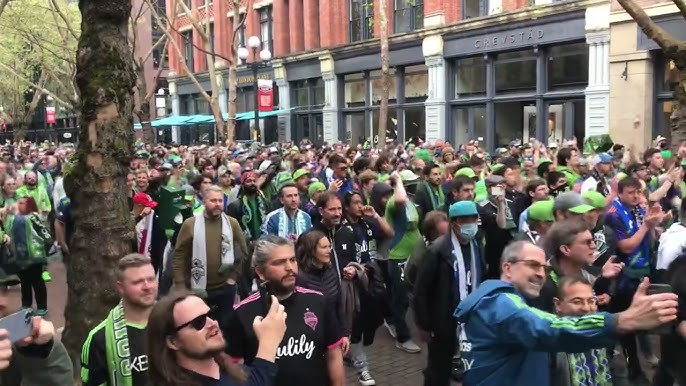
Once upon a time (not long ago) when I lived in Seattle and Portland, some of my favorite memories involve attending soccer matches at CenturyLink (now T Mobile) Field and Providence Park with friends. In Seattle, we would ride the Link light-rail trains to King Street Station and make our way by foot to or from the stadium, with a stop (see: stops) at watering holes with thousands of other fans. In Portland, we would either take the MAX light rail or ride our bikes to the stadium area for pregaming (a euphemism for beer-guzzling) at a nearby bar. There is nothing like being around thousands of other fans in the thrill of victory or the agony of defeat and not worrying about the drive home. While tailgating is fun too, it’s just not the same. Having both options is the best of all worlds.

An example of pre & post-game festivities in a walkable area

New Neighborhood and Open Space

An analysis of the 18-plus acre USPS site highlights just how much potential there is to deliver much more than a stadium and parking lot. While a garage could certainly fit, there is ample space for residential development capable of accommodating up to hundreds of new residents at an appropriate scale between the single-family homes of Martineztown and the mid-rises of north downtown. I wanted to illustrate how the stadium could be tucked near the tracks while medium-density mixed-use structures, like the new ones at Old ABQ High Lofts, could line Broadway to provide spaces for small businesses, activate the street, and buffer Martineztown.  

Arena

The existing footprint of the 1980’s east wing convention center expansion, in addition to the parking lot just to the south, could fit a 16,000-seat arena. This is the footprint of the Wells Fargo Arena in downtown Des Moines, Iowa. You might be wondering, but what about the convention center? I’ll get to that next. An arena here would cause very little disruption to the surrounding area because it would replace an existing large floor plate structure. Meanwhile, the garage could be retained or expanded in the existing location and be augmented by garages at One Central, Civic Plaza, and garages at Silver and 2nd and Silver and 5th. A key feature of downtown is having A.R.T. and the RailRunner, offering the ability to deliver thousands of attendees to downtown in a much more efficient and sustainable manner than in automobiles. This is why you build this kind of urban mobility infrastructure – for its efficiency. Further, elimination of the Tijeras connection under the tracks would open up a lot of newly developable land on the east side of the tracks for a plethora of uses including an expanded Innovate ABQ, new residential, office, mixed-use, and/or another garage for the arena and soccer stadium.

Convention Center

Here we have a few options. The cheapest option would be to convert Kiva Auditorium into meeting space, which would actually create more meeting space than exists in the east wing meeting rooms. Technically, Kiva Auditorium would be redundant with the arena due to its ability to host concerts and other stage performances. A new performing arts center (see next item below) would add additional redundancy and expand capabilities for conventions. A much more audacious and expensive undertaking would be to rebuild the convention center’s west wing to be taller, adding additional levels and square footage. This seems like a longer-term opportunity due to the slowly recovering convention market but I’m just throwing it out there as it is feasible without requiring additional land. In either option, the floor level of an arena could double as exhibition space to replace the east wing’s large showroom. 

Civic North RFP Proposal: Performing Arts Center

I dropped in the footprint from my favorite Civic North RFP response, Reunion Center, which proposed a 2,500-seat theater, a black box theater, a 220-room hotel, over ten thousand square feet of retail, and 117 residences in a stunning tower. The city lacks a theater like this (the nearly 60-year-old Popejoy Hall is smaller and can only host so much) and we have heard for years that downtown needs more hotel rooms to compete for bigger conventions. Seems like a win-win. Does anyone know why Keller canceled this RPF?

Railyards Park

The Railyards are the southern anchor of the Rail Trail. Something missing from downtown is a variety of open spaces for people to relax, socialize, and be surrounded by trees and vegetation. It would be nice to see additional space carved out for open space uses along the Rail Trail and this seems like a great opportunity. 

Conclusion

Of course, a vision like this comes with a hefty price tag but big plans are intended to be completed over time, sometimes within a decade if well planned and funded. As Daniel Burnham once said, “Make no little plans. They have no magic to stir men’s blood and probably will not themselves be realized.” A careful phasing and funding approach would be key to making something of this scale work.

Oklahoma City provided a sublime template for how to fund and construct large projects over time to greatly increase the quality of life in a city, which has paid dividends in increased commerce and improved in-migration patterns following an initial investment of just over $300 million. Similarly, Des Moines spent $217 million in 2002 for their arena and convention center, while Omaha spent $507 million in 2000. The result for these cities has been billions of dollars of private investment due to the scale and location of their infrastructure and venues, along with events that those cities were never before capable of attracting. Cities who chose to locate venues in downtown have all seen their city cores come back to life as a result of their commitments, yet we continue to ask why downtown Albuquerque is failing and why young and educated folks are leaving for more exciting cities.

No philanthropist is going to rush to our aid and no billionaire is going to bail out downtown or build our venues. Albuquerque will need to commit to investing real money if we truly want downtown to thrive. If we’re going to spend these large sums of money, we better be damn certain we’re getting the best bang for the buck (ROI) and hold our city leaders accountable for their whims. Keller should not propose the stadium at the Balloon Fiesta. Every person rooting for downtown, as well as every soccer fan, balloonist, urbanist, and environmentalist should let the mayor and their councilors know that this is not the answer. I’m curious to know how the ballooning community feels about a large structure near the landing field and I’m also highly doubtful that this is the favored option by New Mexico United ownership. What we do know is that the Balloon Fiesta Park Master Plan explicitly prohibits outdoor stadiums, in which case it is unlikely that the community will feel any different this time around. Regardless, we should hold off until we receive a better proposal.

People are always impacted by big decisions, but our leaders are supposed to stand up for the right thing for the entirety of the city, not capitulate for votes and what is easy and cheap. People shouldn’t need a car to attend events at public venues, where is the equity in that? 12th and I-40 is the next best option as it is centrally located and builds off the Rail Trail. For crying out loud, even a Fairgrounds stadium would be leaps and bounds better than Balloon Fiesta Park. Just say no to a stadium at Balloon Fiesta Park.

For perspective on successes and failures in cities and their stadia, check out this YouTube video from an urban planning expert who goes by the name CityNerd.